
But "programmatic" isn't a single ad format. It's the powerful technology engine that buys and delivers advertising inventory in milliseconds. For Indian businesses, understanding this ecosystem is no longer optional—it's essential for growth. This guide will walk you through how it all works, from the costs and benefits to setting up and measuring your first campaign.
Key Takeaways
- Programmatic advertising is the automated buying and selling of digital ad space using software and real-time bidding.
- It delivers a wide range of formats, including display, video, audio, and even ads on OTT platforms and digital billboards.
- Success depends on more than automation; it requires quality data, relevant creative, brand safety, and constant human optimisation.
- Businesses should always weigh programmatic buying against direct deals with publishers to find the right media mix for their goals.
What Is Programmatic Advertising?
Programmatic advertising is the use of software to buy digital advertising. While "digital advertising" is the broad category of all ads on digital channels, "programmatic" refers specifically to the automated process of buying and placing those ads.
Instead of calling a sales representative to book a banner ad on a specific website for a month, you define your campaign goals in a platform. You set the audience, budget, geographical limits, and creative assets. The software then bids automatically on ad spaces across thousands of websites and apps that match your criteria, all in real-time.
A common misconception is that programmatic is a type of ad. It's a buying method. A video commercial, a banner ad, or a native placement can be purchased either programmatically or through a traditional direct deal with a publisher.
Programmatic vs. Traditional Media Buying
| Feature | Programmatic Buying | Traditional Direct Buying |
|---|---|---|
| Process | Automated, auction-based, real-time | Manual negotiation, insertion orders |
| Targeting | Dynamic, based on audience data and context | Fixed placement on a specific site or section |
| Scale | Massive reach across thousands of publishers | Limited to the publisher's direct inventory |
| Flexibility | Budgets and targeting can be adjusted on the fly | Locked in for the duration of the contract |
| Control | Granular control over who sees the ad and when | Control over the specific placement environment |
For businesses in India, this technology supports precise national and regional campaigns. You can target users in specific cities, speakers of a given language, or people who have shown interest in a product category, so spend stays relevant and efficient.
How Does Programmatic Advertising Work?
The programmatic ecosystem might seem complex, but it boils down to a few key players working together at lightning speed.
The Key Participants
- Advertisers & Agencies: They set the campaign strategy—defining goals, audiences, budgets, and the creative content for the ads.
- Demand-Side Platforms (DSPs): This is the software advertisers use to buy ad inventory. It’s a single interface for managing bids across numerous sources.
- Supply-Side Platforms (SSPs): This is the software publishers (like website or app owners) use to sell their ad inventory.
- Ad Exchanges: Think of this as a digital marketplace that connects DSPs and SSPs, running the auctions for ad impressions.
The Real-Time Bidding (RTB) Process
The full sequence plays out in the split second it takes for a webpage to load. That process is called Real-Time Bidding (RTB).
- A User Arrives: Someone opens a webpage, app, or starts streaming a video. This creates an available ad space, or "impression."
- Auction Request is Sent: The publisher's SSP sends a bid request to the ad exchange. This request contains anonymous data about the user (like their general interests or location), the device, and the content of the page.
- DSPs Assess and Bid: The ad exchange forwards this request to multiple DSPs. Each DSP analyses the opportunity against its advertisers' campaign rules. If the impression matches an advertiser's target audience, the DSP submits a bid.
- A Winner is Chosen: The ad exchange runs an auction. The highest bidder wins.
- The Ad is Served: The winning ad is instantly sent back to the user's screen and displayed.

This entire sequence happens in about the time it takes you to blink. For example, a hotel in Goa could use a DSP to target users in Delhi and Mumbai who have recently searched for "beach resorts" or "holiday packages." When one of these users visits a travel blog, the hotel's DSP would recognise the opportunity and bid to show them an ad for its new property.
Automation does not mean "set it and forget it." Human experts must constantly review targeting parameters, budgets, inventory quality, and brand safety settings so the campaign performs effectively and responsibly.
Types of Programmatic Advertising
Programmatic advertising covers multiple buying methods and formats. The right mix depends on your campaign goals.
Programmatic Deal Types
Four main deal types determine how inventory is bought:
- Open Marketplace (RTB): Open auction where any advertiser can bid on inventory from a wide range of publishers. Offers massive scale but less predictable placement quality.
- Private Marketplace (PMP): Invitation-only auction where publishers offer premium inventory to select advertisers, with more control over placement.
- Preferred Deals: Advertiser gets a "first look" at inventory at a pre-negotiated fixed price before it reaches the open marketplace.
- Programmatic Guaranteed: Automated version of a traditional direct buy. The advertiser commits to a set volume of inventory at a fixed price.
| Deal Type | Access | Control | Predictability | Use Case |
|---|---|---|---|---|
| Open Marketplace | Broadest | Lowest | Low | Maximum reach, retargeting |
| Private Marketplace | Invite-only | Medium | Medium | Brand safety, premium inventory |
| Preferred Deal | Negotiated | High | Medium | Priority access without commitment |
| Programmatic Guaranteed | Direct | Highest | High | Guaranteed placement, brand campaigns |
Formats and Channels
Programmatic technology can deliver ads across many digital environments. In India, growth in Connected TV and Digital-Out-of-Home (DOOH) has been especially strong. An EY-FICCI 2025 report noted 30 million weekly active connected TVs in 2024 and 78% growth in DOOH.
Common formats include:
- Display Ads: Banners and images for awareness and traffic.
- Native Ads: Ads that match the look and feel of the surrounding content.
- Video & OTT/CTV: Commercials on streaming services like Hotstar or SonyLIV, combining TV's impact with digital targeting.
- Mobile & In-App: Ads designed for smartphone and tablet experiences.
- Audio: Ads within music streaming services and podcasts.
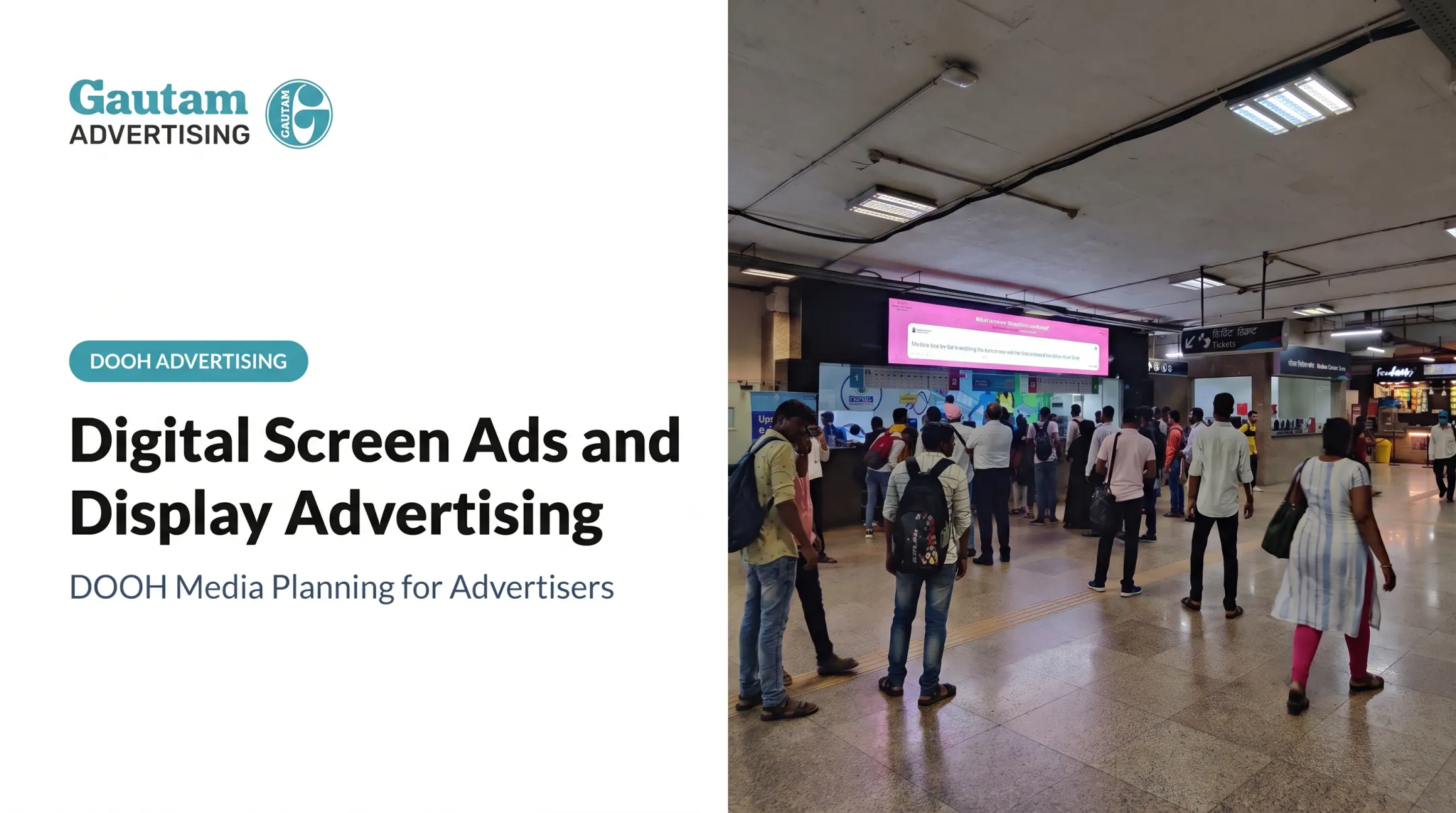
- Digital Out-of-Home (DOOH): Programmatic ads on digital screens in malls, airports, and corporate parks.
A smart campaign often uses a mix of these. For instance, you might use open marketplace display ads for broad reach and premium video on OTT platforms for brand storytelling.
Benefits, Limitations, and Risks
While powerful, programmatic advertising has both advantages and potential pitfalls that every advertiser in India should understand. Projections from a Dentsu India report suggest programmatic buying could account for 42% of digital media spending by the end of 2024.
Key Benefits
- Efficiency: Automated buying saves time and resources previously spent on manual negotiations.
- Reach: Access a vast network of websites, apps, and digital channels from a single platform.
- Flexibility: Adjust targeting, budgets, and creative in real-time based on performance data.
- Data-Driven Optimisation: Use performance metrics for faster decisions that improve campaign outcomes.
Limitations and Risks
The biggest risks in the programmatic world are ad fraud and brand safety. Ad fraud involves fake impressions generated by bots, while brand safety concerns your ad appearing next to unsuitable or harmful content.
Active management makes a measurable difference. A recent report from Integral Ad Science found that global ad fraud rates on campaigns without fraud mitigation technology were as high as 10.9%. On campaigns with optimisation, that rate dropped to just 0.7%.

Other risks include:
- Complex Supply Chains: The path from advertiser to publisher can be murky, sometimes with unclear fees.
- Data Privacy: Using audience data comes with responsibility. With India's Digital Personal Data Protection (DPDP) Act, ensuring you have proper consent for data use is non-negotiable.
- Viewability Issues: An ad may be "served" but never actually seen by a human if it's below the fold or loads too slowly.
Sometimes, programmatic isn't the best fit. If your goal is guaranteed placement in a highly respected local newspaper or a specific premium magazine, a direct buy might be more suitable. Many advertisers combine both approaches in a blended media plan.
How to Plan, Budget, and Measure a Programmatic Campaign
A successful programmatic campaign starts with a solid plan.
1. Define Your Strategy
Before you spend a single rupee, get clear on your goals.
- Objective: What do you want to achieve? Is it brand awareness, website visits, lead generation, or driving sales?
- Audience: Who are you trying to reach? Define their demographics, interests, location, and language.
- Campaign Setup: Choose your formats (video, display), deal types (open vs. private), inventory quality requirements, and campaign duration.
2. Set Your Budget
There is no fixed price for programmatic advertising. Most inventory is bought on a Cost Per Mille (CPM) basis, meaning the price for 1,000 impressions. This cost can vary widely based on:
- Audience demand
- Geographic targeting
- Inventory quality (a premium news site vs. a small blog)
- Ad format (video is typically more expensive than display)
Beyond the media cost, you may also have fees for the DSP, data usage, ad verification, and agency services. Start with a test budget to set performance benchmarks, then scale once you know what works.
3. Choose the Right Partner
If you want expert guidance, a media agency partner can help you plan and buy more effectively. When you evaluate a partner, look at their:
- Access to relevant inventory across India
- Targeting and fraud prevention capabilities
- Fee transparency and reporting quality
- Experience with the formats you need (OTT, DOOH, etc.)
At Gautam Advertising, we act as your strategic media planning partner. With over 55 years in the advertising industry and INS accreditation since 1976, we help you navigate the full media landscape.
We execute programmatic buys and also advise on whether websites, mobile apps, and OTT should sit alongside print and DOOH so the full plan works as one campaign.
4. Measure What Matters
Match your metrics to your original objective.
- Awareness: Track impressions, reach, frequency, and viewability.
- Consideration: Measure clicks, click-through rate (CTR), and cost per visit.
- Conversion: Monitor leads, sales, cost per acquisition (CPA), and return on ad spend (ROAS).

Remember to allow enough time for data to accumulate before making major optimisation decisions.
Programmatic Advertising in India: Choosing the Right Approach
For Indian advertisers, local context is everything. You need to evaluate audience scale, city and regional targeting capabilities, and the cultural relevance of your messaging. With a vast and diverse population, a one-size-fits-all approach will fail.
Instead of treating digital buying in isolation, connect it with your other media efforts. Consistent messaging across print, DOOH, and programmatic channels, combined with smart audience management, improves overall campaign performance.
A Simple Decision Framework
- Choose Programmatic for: Scalable digital reach, flexible optimisation, and audience-based targeting across multiple channels.
- Consider Direct Buys for: Guaranteed placement in premium publications, building local trust, or reaching a very specific niche audience.
- Use a Blended Plan for: Combining the broad credibility of traditional media with the measurable follow-up of digital.
Before committing, ask any prospective partner tough questions about their inventory sources, data practices, fee structures, and brand safety controls.
The first step is always the same: define your objective and audience. From there, a qualified media planning partner can help you build a campaign matched to those goals.
Frequently Asked Questions
How much does programmatic advertising cost?
There's no fixed price. Costs typically use a CPM (cost per 1,000 impressions) model that varies with audience demand, inventory quality, and targeting. Platform, data, and agency fees also apply.
What is programmatic advertising?
It's an automated method of buying and selling digital ad space. Advertisers use software to bid on impressions across websites, apps, and other channels in real time based on campaign parameters.
What are examples of programmatic advertising?
Examples include display banners on websites, video ads on OTT platforms like Hotstar, native ads in news feeds, audio ads on streaming apps, and commercials on digital billboards in malls and airports.
What are the four main types of programmatic advertising?
The four main deal types are the open marketplace (RTB), private marketplaces (PMPs), preferred deals, and programmatic guaranteed. Each balances scale, control, and price predictability differently.
How does programmatic advertising work?
An advertiser uses a DSP to bid on ad impressions offered by publishers through an SSP. An ad exchange runs an instant auction, and the winning ad is delivered to the user's screen as the page loads.
What is the difference between programmatic advertising and display advertising?
Display advertising is the visual format of an ad, like a banner or image. Programmatic advertising is the automated method used to buy and place those ads and many other formats.